
Tobias Zehntner
Halo, 2025
at All Saints Church, Northamptonshire
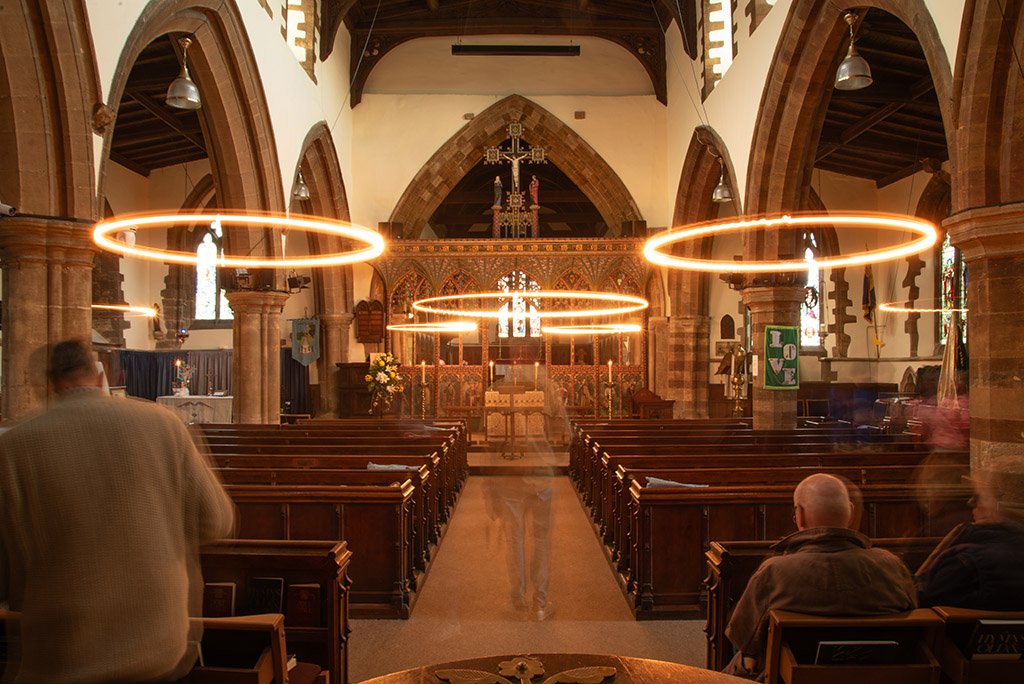


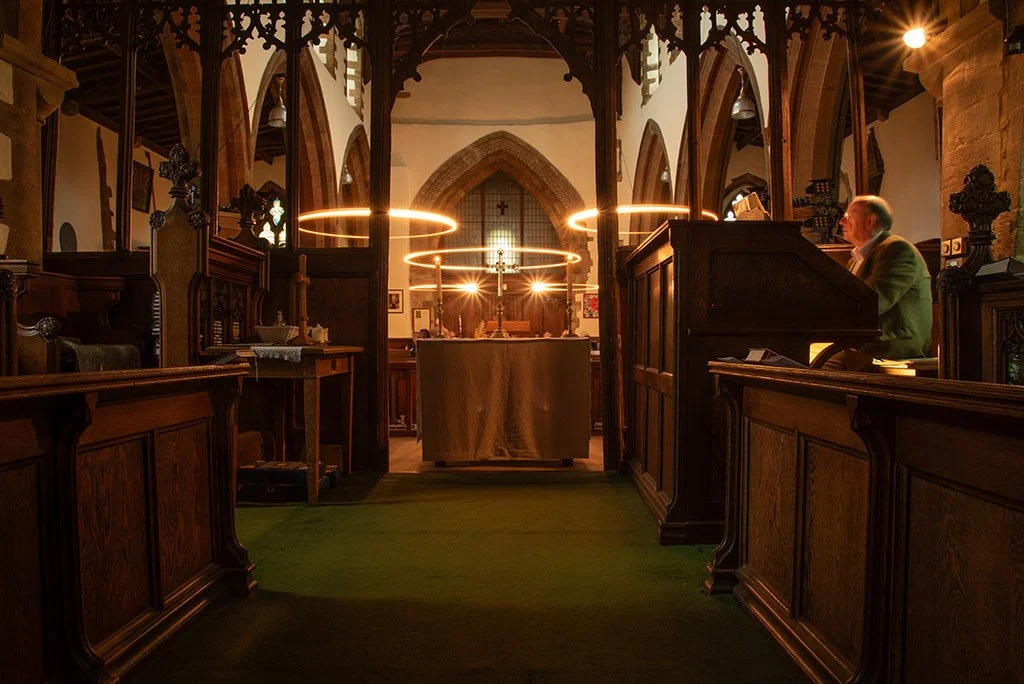
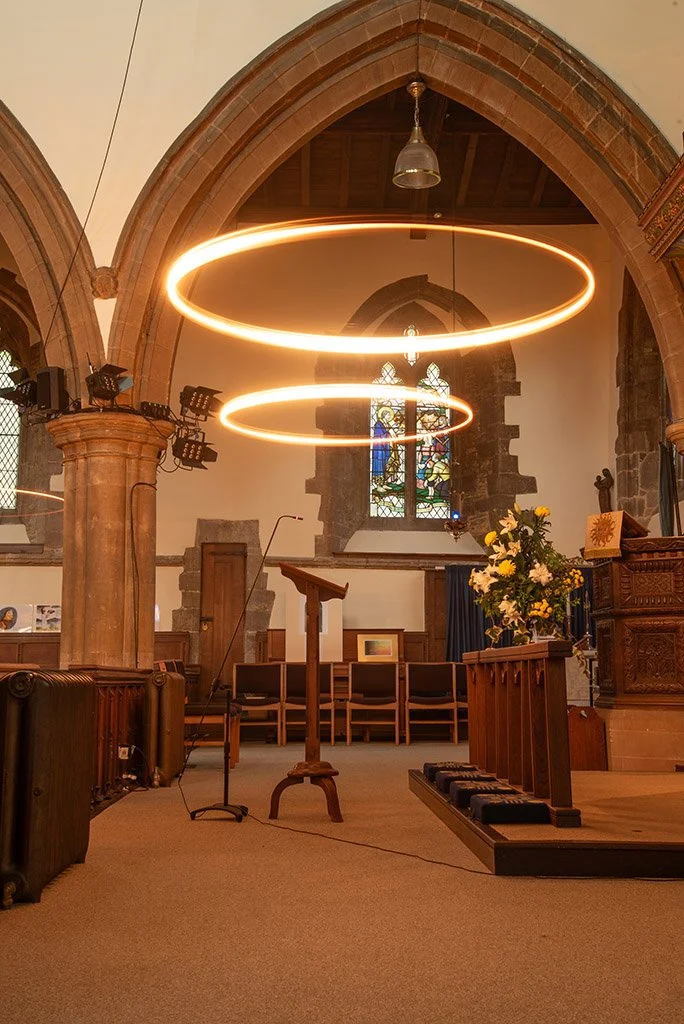
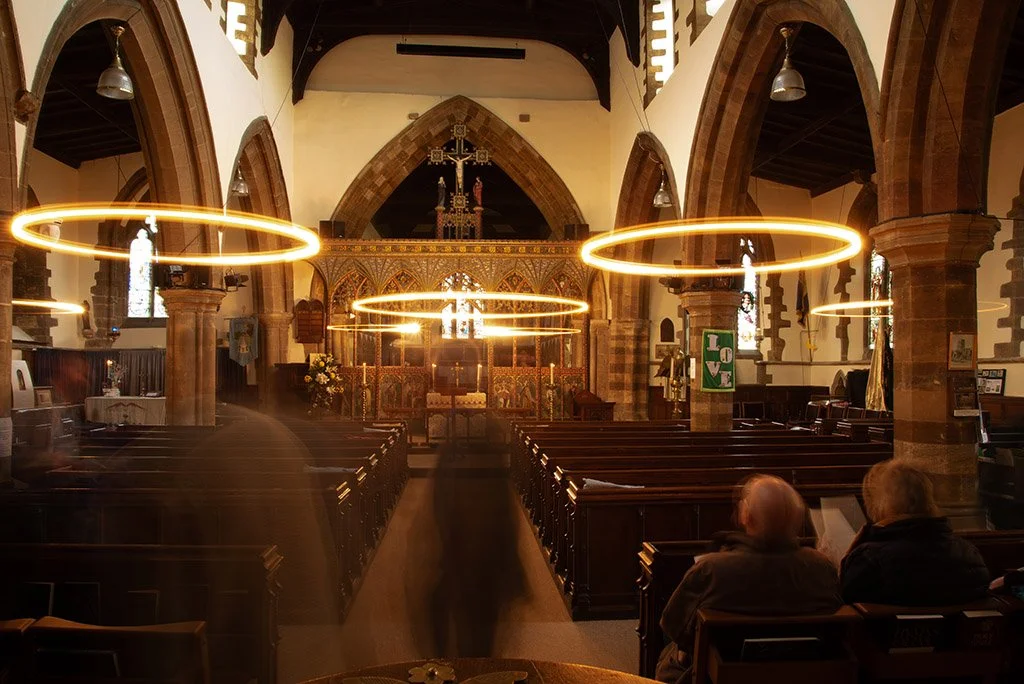
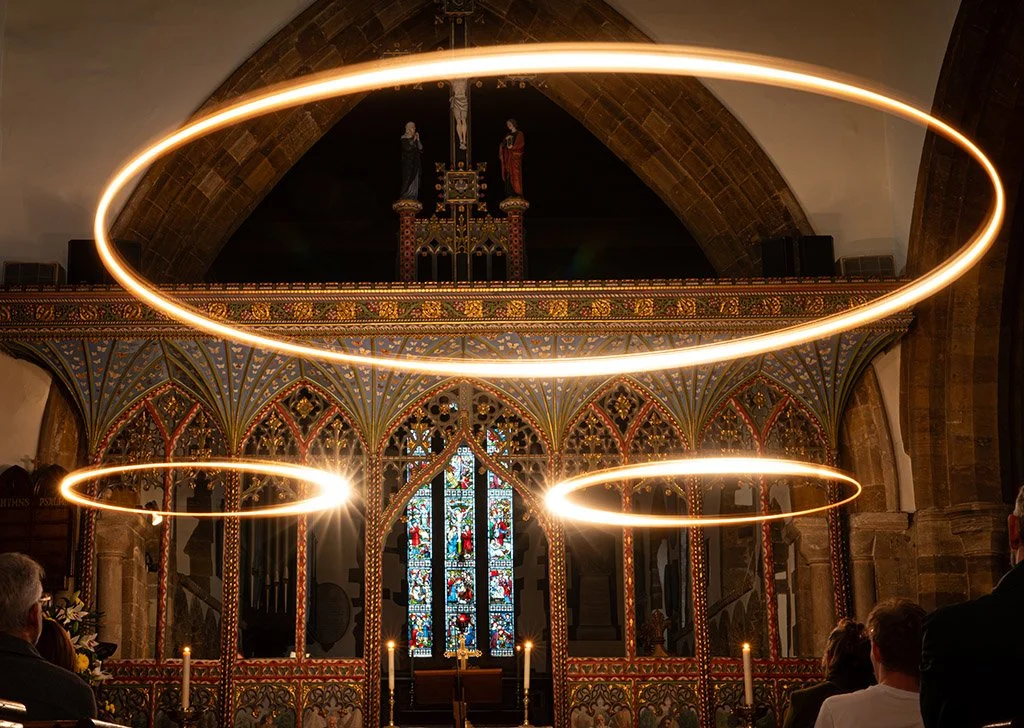
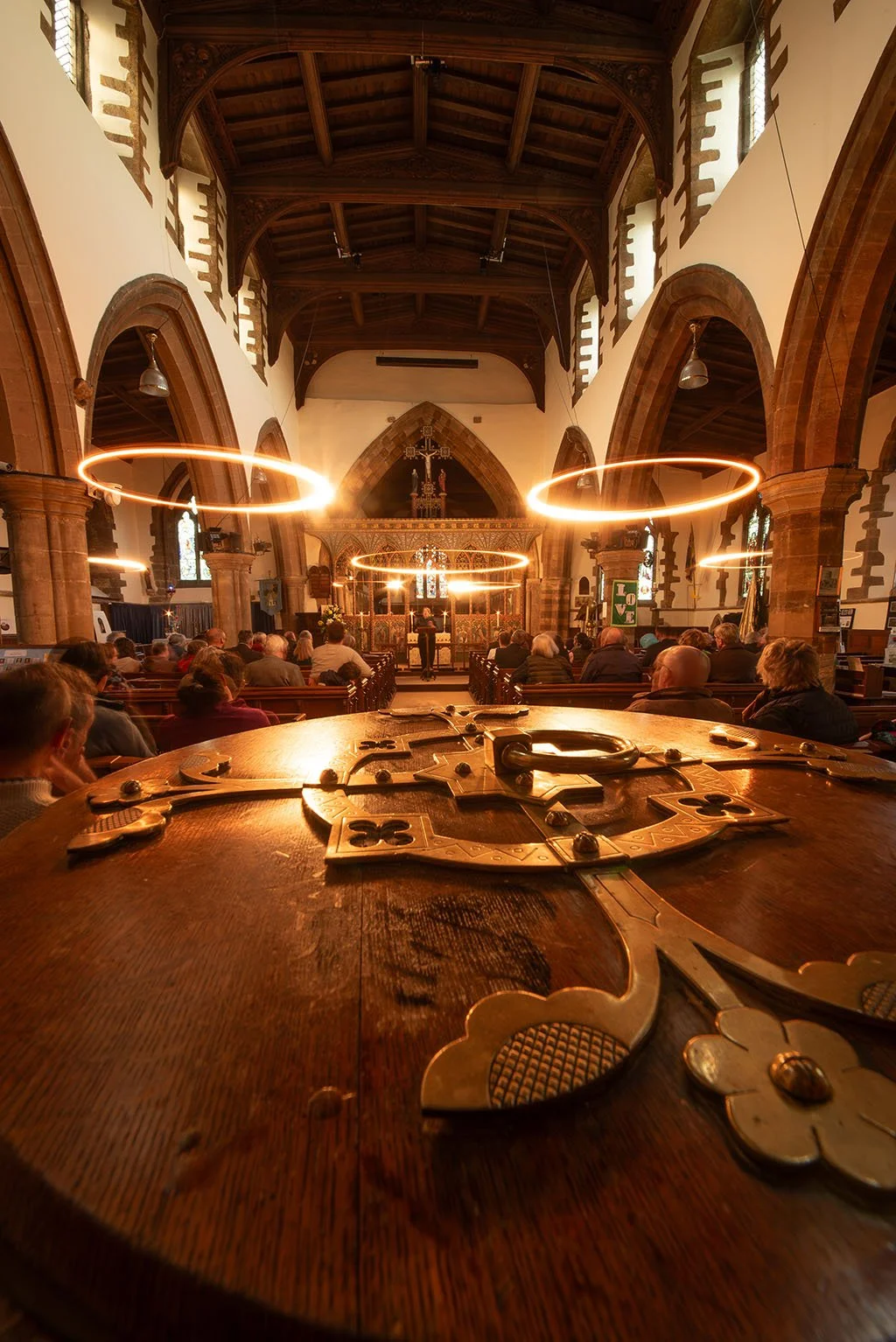
Halo transformed the Grade I listed Anglo-Saxon All Saints Church in Earls Barton into a space of luminous reflection and shared wonder. Conceived by Swiss-Danish artist Tobias Zehntner and commissioned by Fermynwoods Contemporary Art, the installation consisted of rotating light sources suspended above visitors to the church. Their movement cast shifting rings of light and shadow across the Norman arches, forming spectral halos that appeared to hover over visitors’ heads — a contemporary echo of candlelight worship and the numinous presence it evokes.
With this project, Fermynwoods aimed to bring internationally celebrated contemporary art into a rural sacred context — to revitalise the church as a meeting point, foster interfaith and intercultural reflection, and connect diverse groups through a shared sense of wonder.
Zehntner explained, “I wanted to light the space as if candles would dance inside.” The resulting interplay between architecture and light was both contemplative and quietly spectacular — a gentle choreography that invited stillness and collective awe. Visitors found it comforting and calming, with Reverend Jenny Bland describing the installation as ‘the perfect expression of that sacred in-between.’”
The site-specific project was realised through close collaboration between artist, curator, and church community. James Steventon, Director of Fermynwoods Contemporary Art, led commissioning, technical coordination, and interpretation, working hand-in-hand with Reverend Bland, Church Wardens Helen Winrow and David Timms, plus volunteers from the congregation and wider village. Their combined care — from scaffolding logistics to bacon sandwiches for weary riggers — exemplified a shared act of curation rooted in trust, hospitality, and devotion to place.
Alongside the installation, which remained in situ during religious services, Halo hosted ten days of performances and encounters that deepened its connection with faith and community. Highlights included a launch event featuring new music by Northamptonshire composer George Turvey and an organ recital by Alan Cufaude. Further evenings saw performances by a harpist, the Amicorum Singers, Ukes of Chaos, and others, each drawing fresh audiences into the sacred space. Local schools, Beavers, and Squirrel groups visited to explore how light and sound transform architecture; many entered the church for the first time. Approximately 1,000 people attended, many of whom reported no previous engagement with the arts, church, or heritage venues.
Feedback revealed profound emotional impact. One widower found solace in the work’s quiet radiance, adding, “She would have loved this. But she’s here in these lights.”
Halo demonstrated how contemporary art can renew sacred architecture by amplifying its inherent spirituality. It rekindled civic pride, strengthened intergenerational ties, and re-invited the wider community into a space of contemplation and connection. As one church warden concluded, “This was one of the best things the church has ever done.”
The temporary installation lives on through a podcast featuring dialogue with the artist, composer, and clergy — a testament to how light, faith, and community can converge in contemporary art.
Photography by Andy Eathorne and Steve Chown