
Tom Denny
East Window, 2025
at St John’s Tisbury
Wiltshire
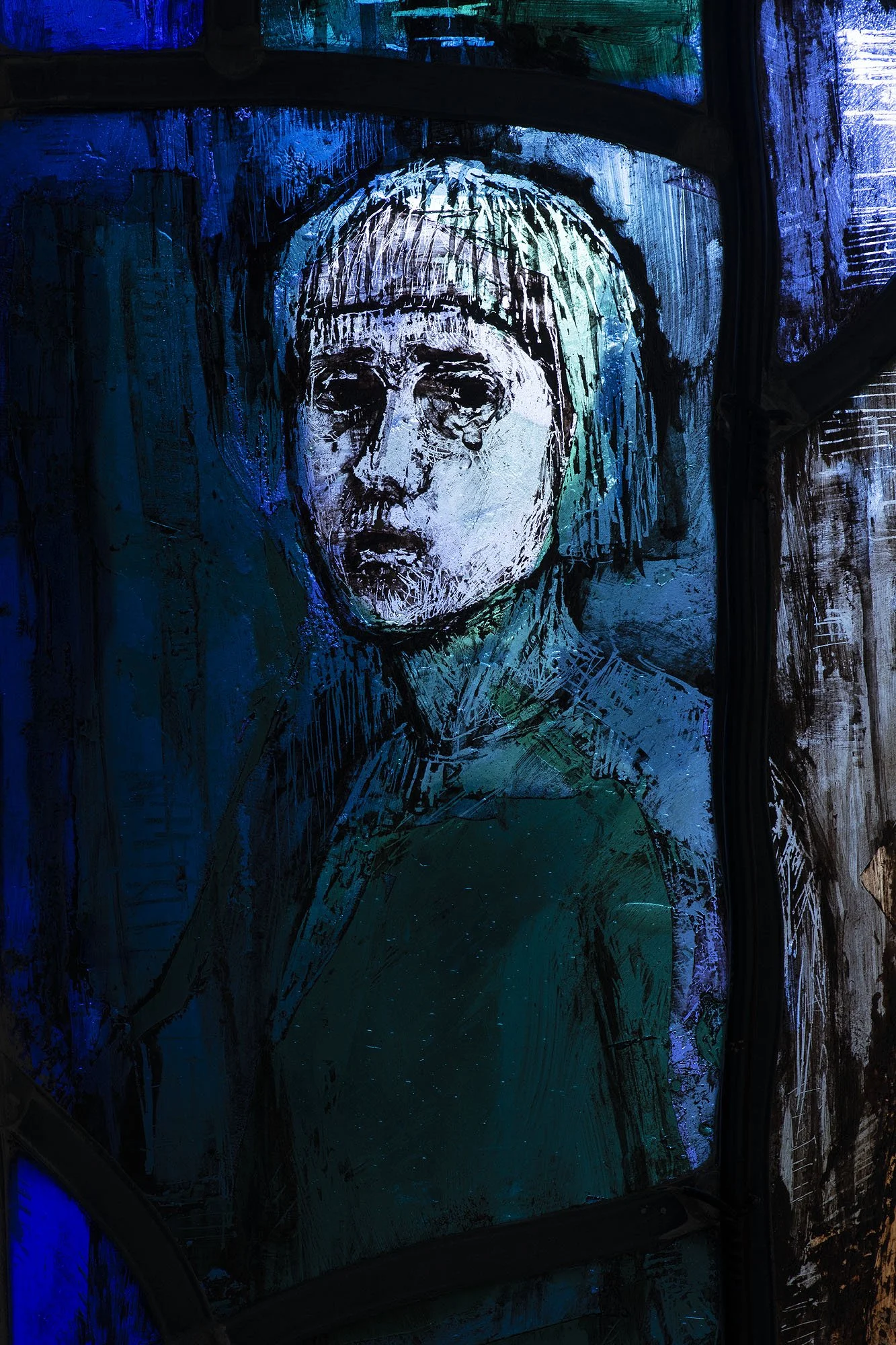
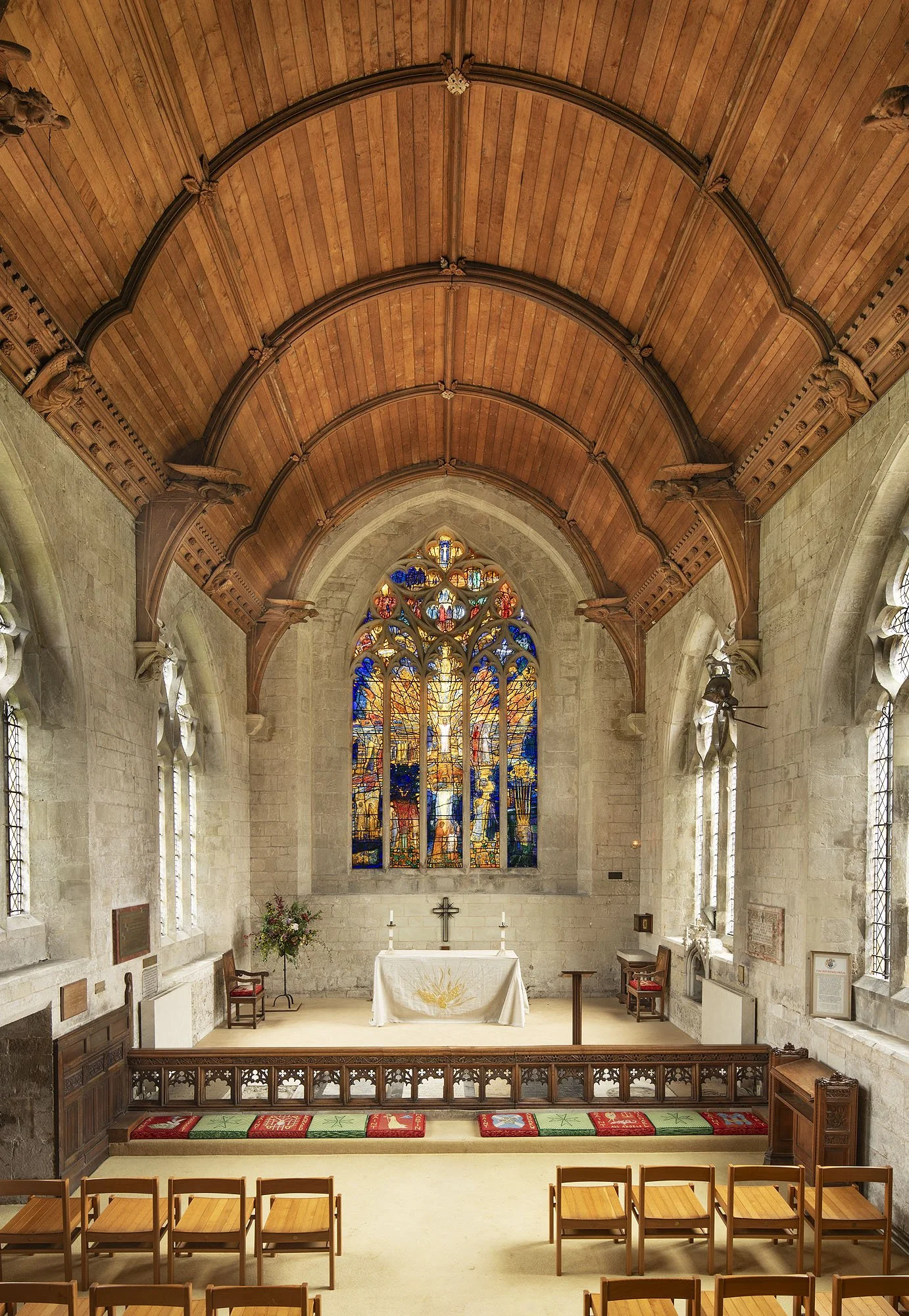
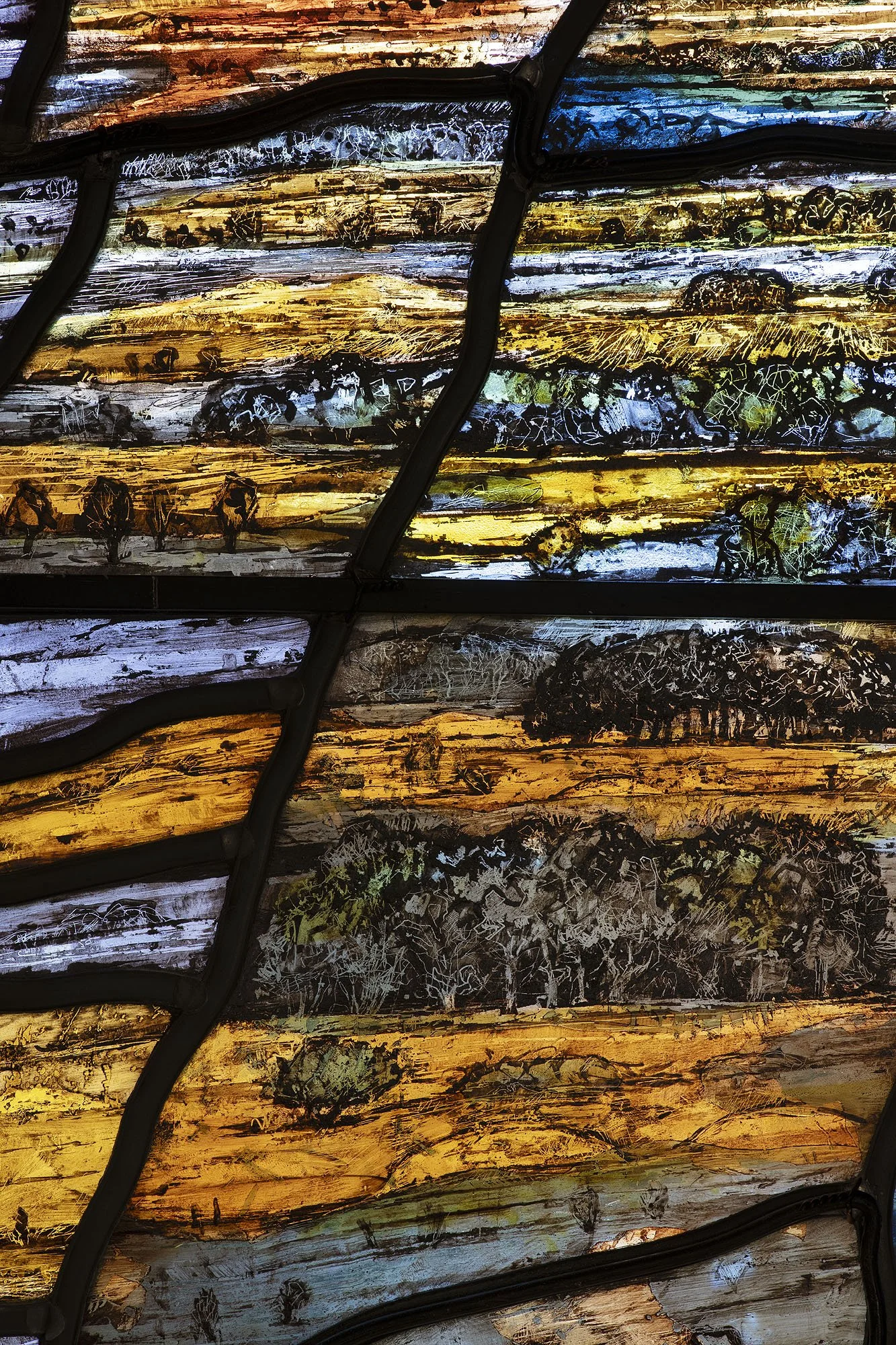
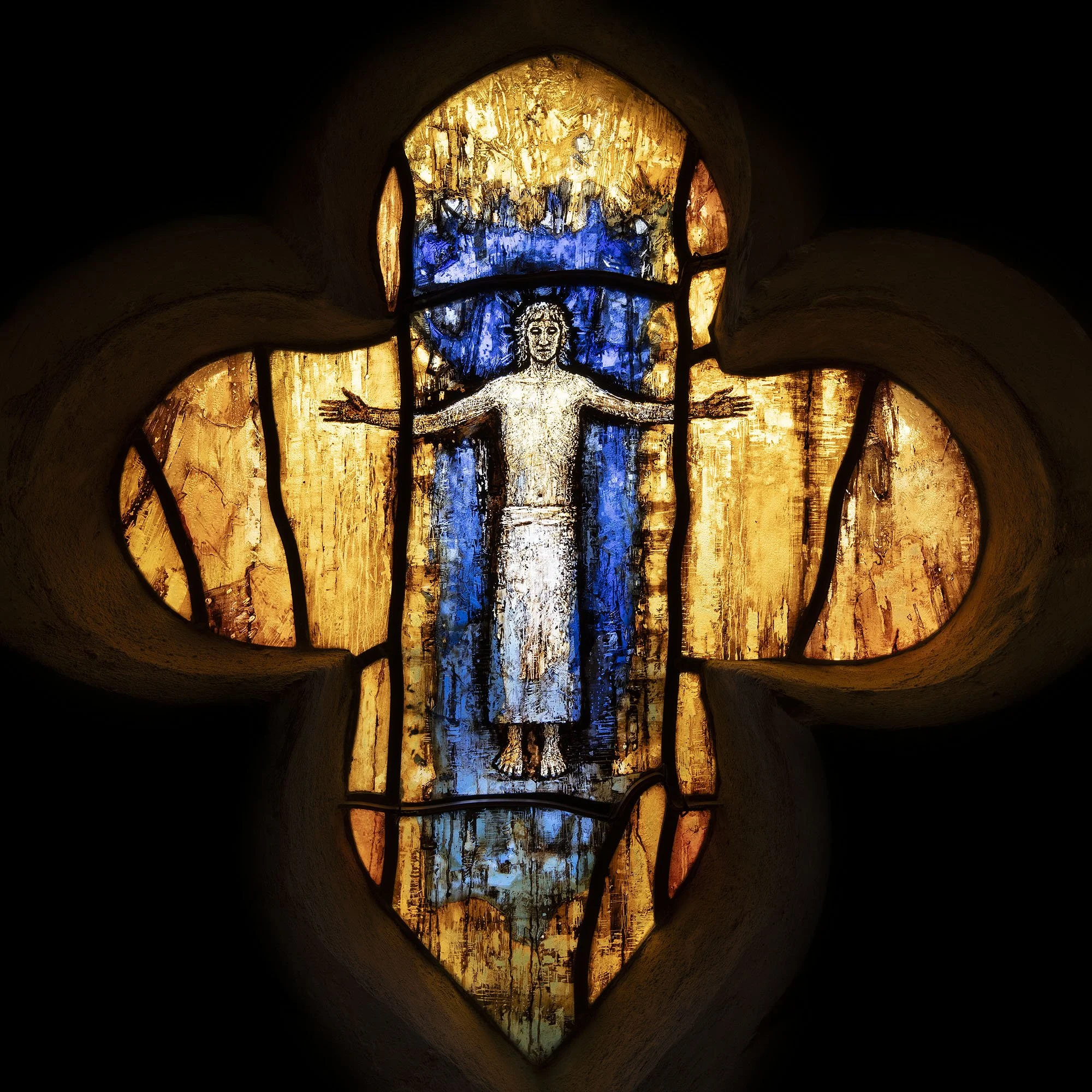
The theme of the window is ‘seeing’ and this is interpreted in as seeing the glory of God, and the epiphanies in ordinary and extraordinary moments in life. Thomas Denny writes:
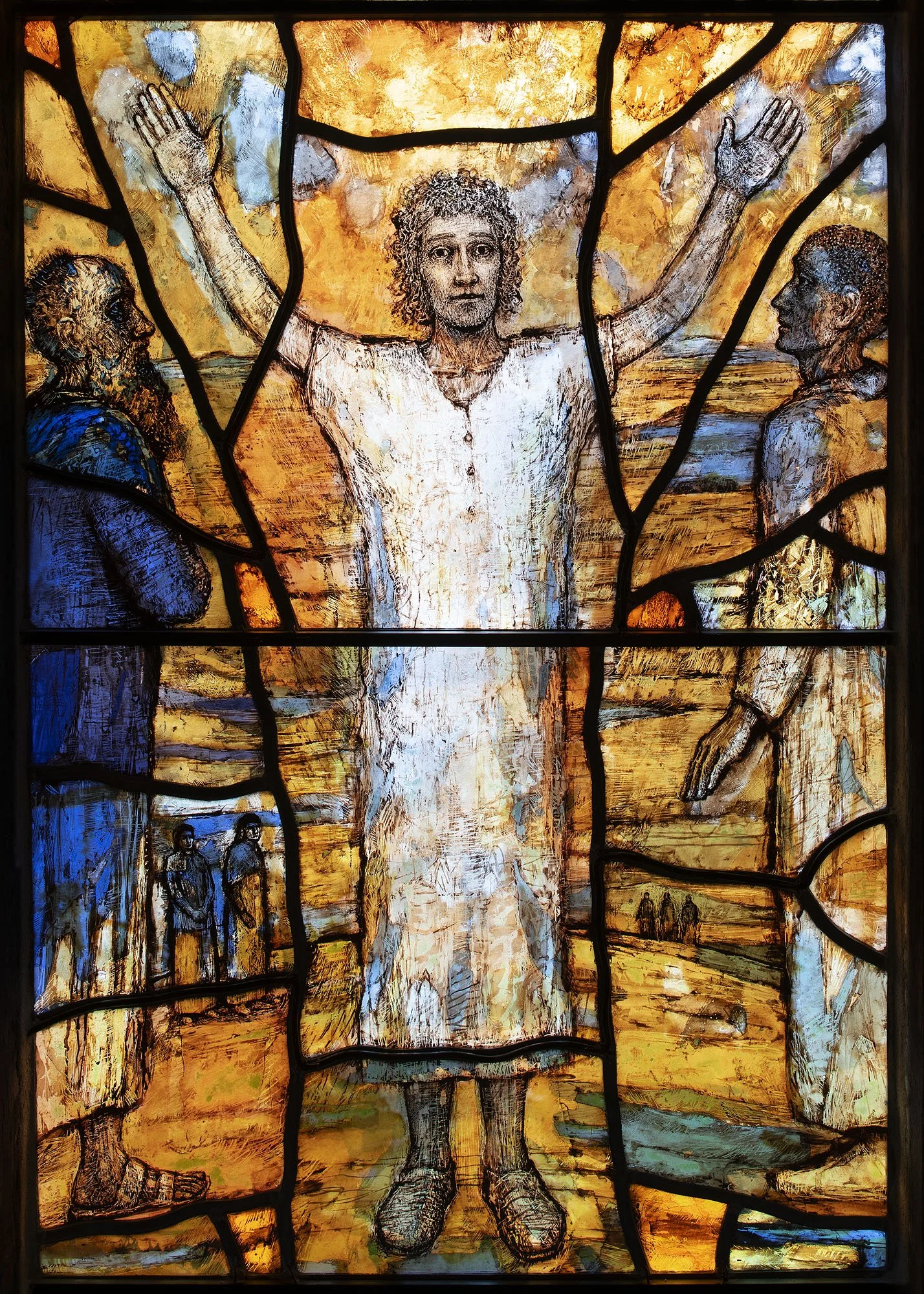
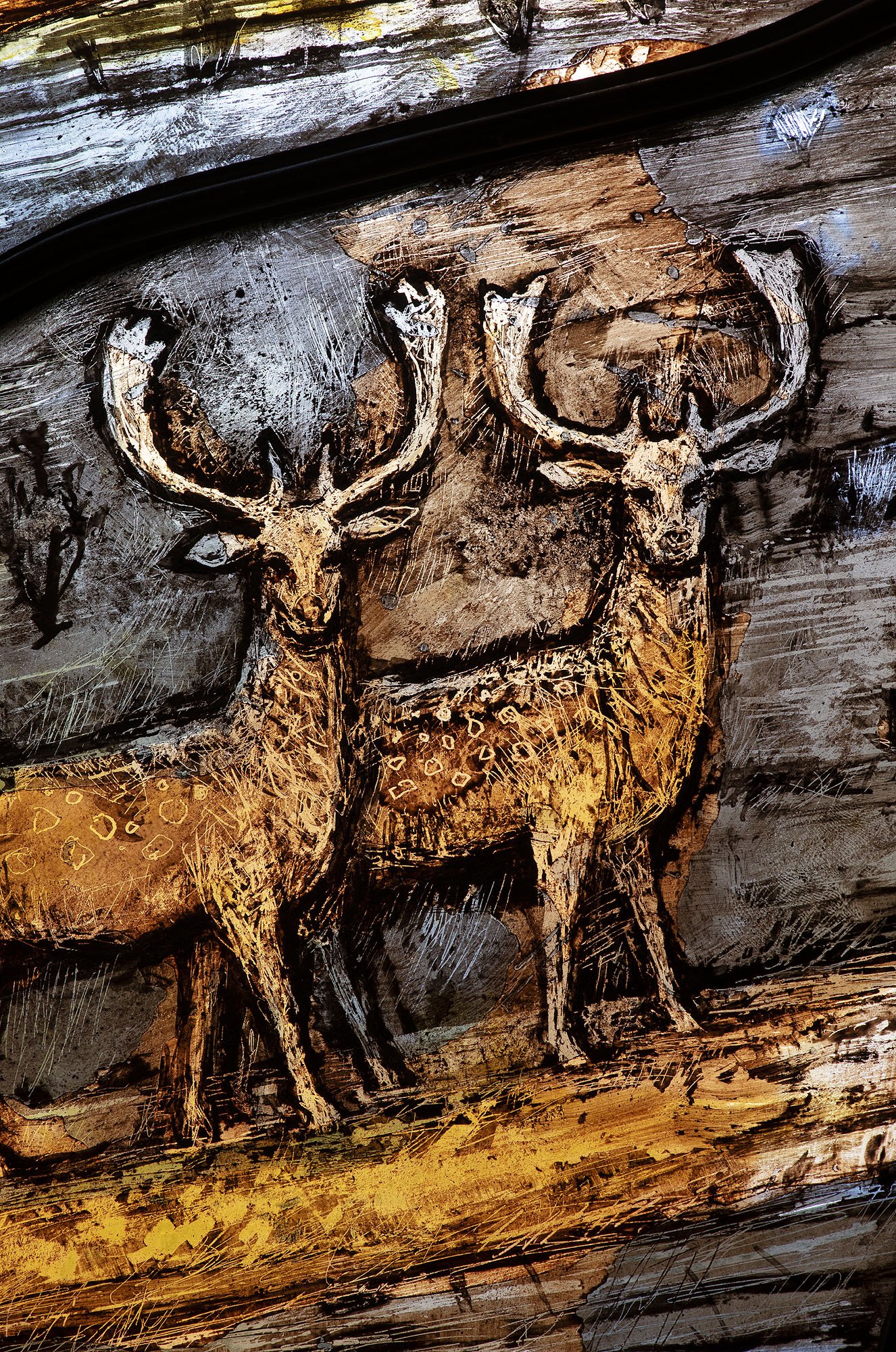
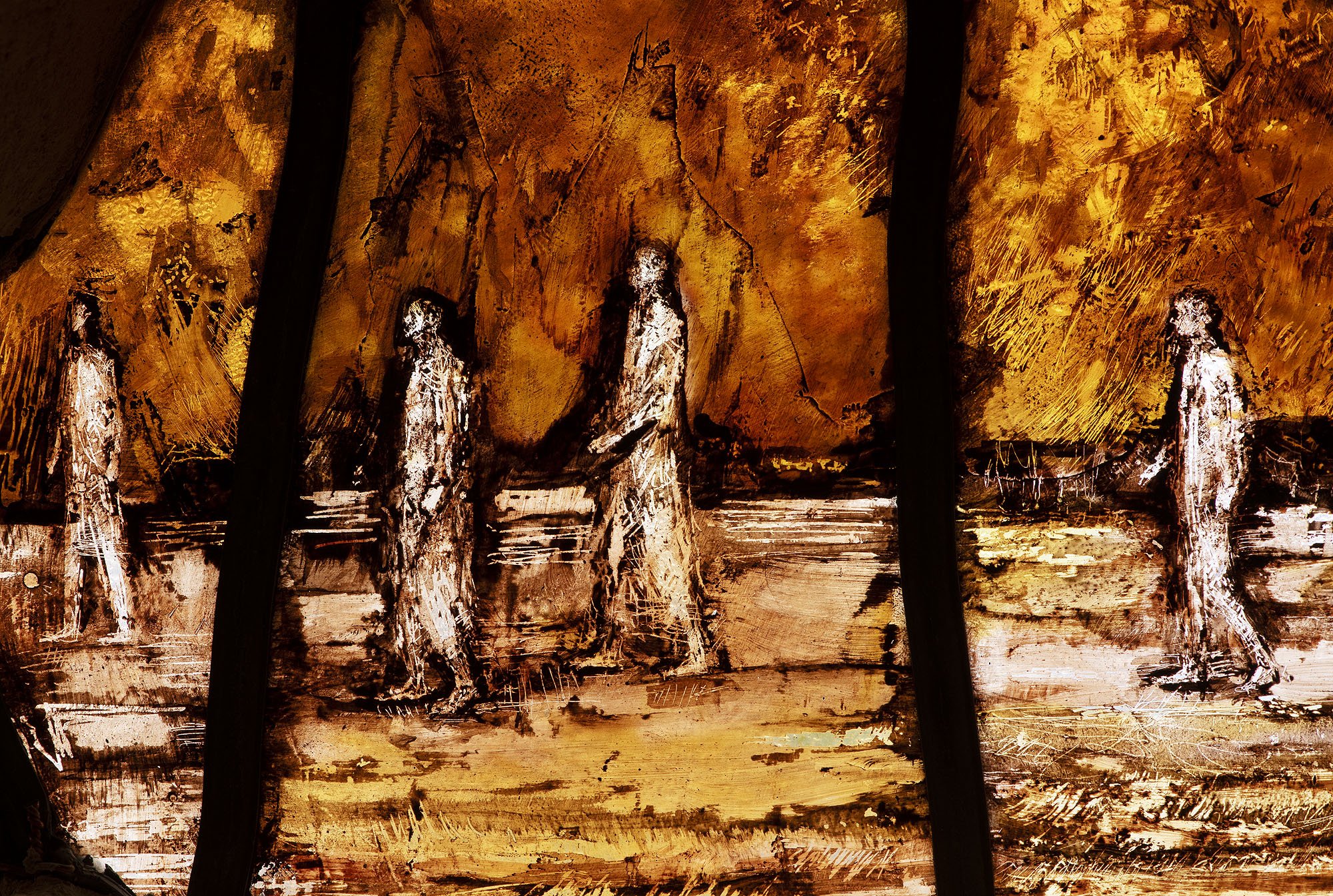
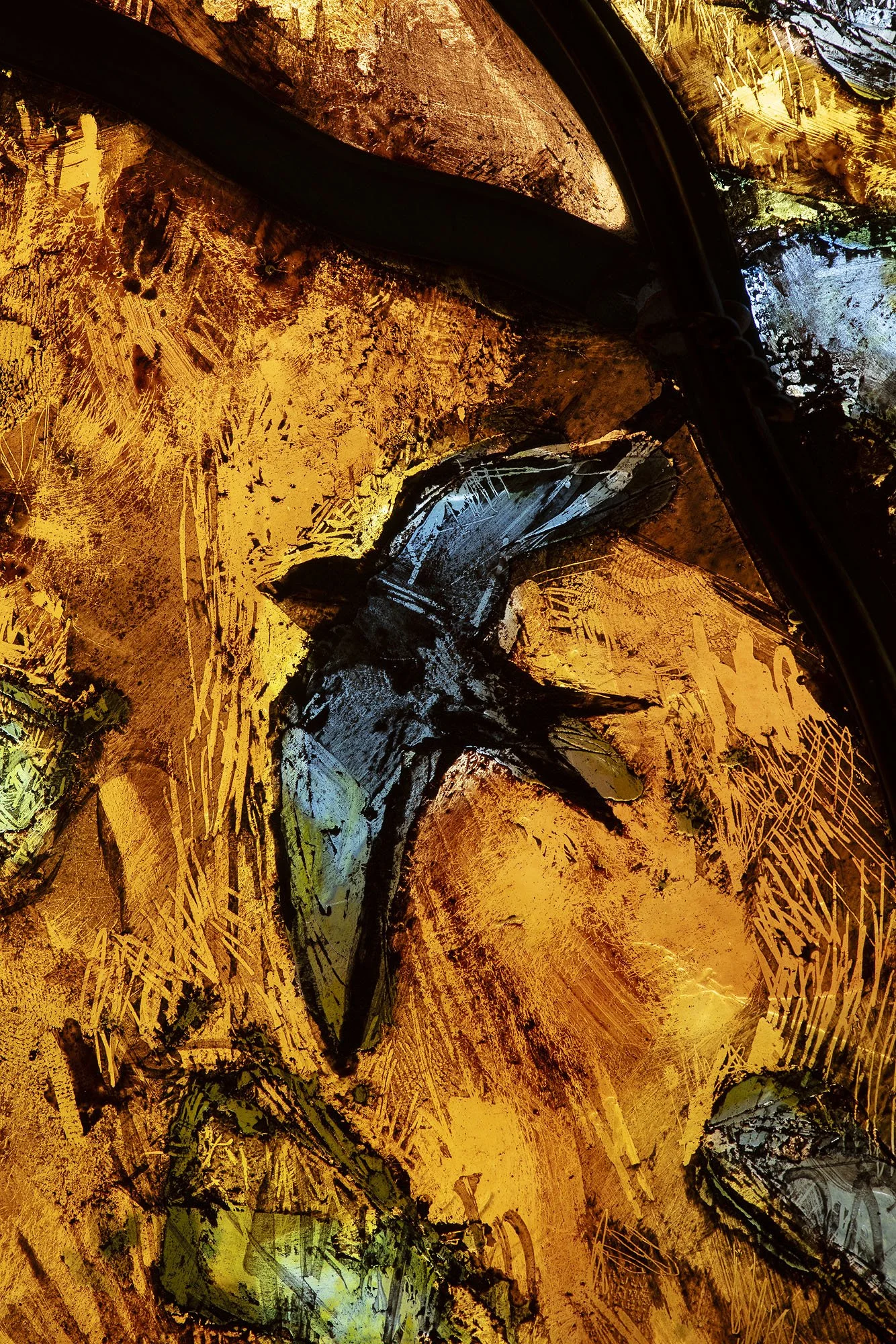
‘This is expressed in the centre of the window in the story of the Transfiguration of Christ, divinity seen amongst us. Various other figures, and creatures, approach this central group: “all the ends of the earth shall see the salvation of our God” [ Isaiah 52:10]. In the inner right-hand light a couple also stands on the hill of transfiguration, looking both at what is happening near to them as well as out over a vast plain, and finding revelations there too; two further figures, a father and son, are themselves “in a mountain, seeing the land, what it is” [Numbers 13: 17, 18]. Landscape recurs throughout: the continuous horizon suggestive of Salisbury Plain, scattered with clumps of trees and barrows. Elsewhere, two young women “lift up their eyes round about, and see” [Isaiah 60: 4]. They see long tailed tits in straggling bushes … a crowd of butterflies … a symbol of resurrection.
In the lower inner left-hand light, a family draws near an ancient yew tree, contemplating the works of God: “I will set in the desert the fir tree, that they may see, and know” [Isaiah 41: 19.20]. Like the young Jesus in the temple [Luke 2:47] the child here seems to lead in understanding. Other embodiments, like the yew, of the layers of time in a place, are scattered on the ground [in this case, neolithic ritual axe heads, again of Wiltshire significance]. In the left-hand light two figures stand transfixed by the mystery and meaning of their surroundings, looking into the sky, and towards a standing sarsen stone: “I will show wonders in the heavens, and in the earth….. your sons and your daughters shall prophesy… your young men shall see visions” [ from Joel 2].
At the bottom of the right-hand light a group of children is seen by a river alders beyond; a familiar Tisbury landscape. They are looking at something found… a mere pebble from the stream? Thomas Traherne celebrated the holy clarity of a child’s vision: “the dust and the stones of the street were as precious as gold”. Or, in Matthew’s Gospel, [ 13:16] “blessed are your eyes, for they see”.
Renewal of sight, actual or metaphorical, is the subject of other scenes. In the central light, Jesus heals a blind man: “receive thy sight” [Luke 18:42]. The setting is a slightly indeterminate street-scape, although 13th century buttresses are indicated; in the left-hand light, a man is suddenly aware of “seeing out of obscurity” [Isaiah 29:18].
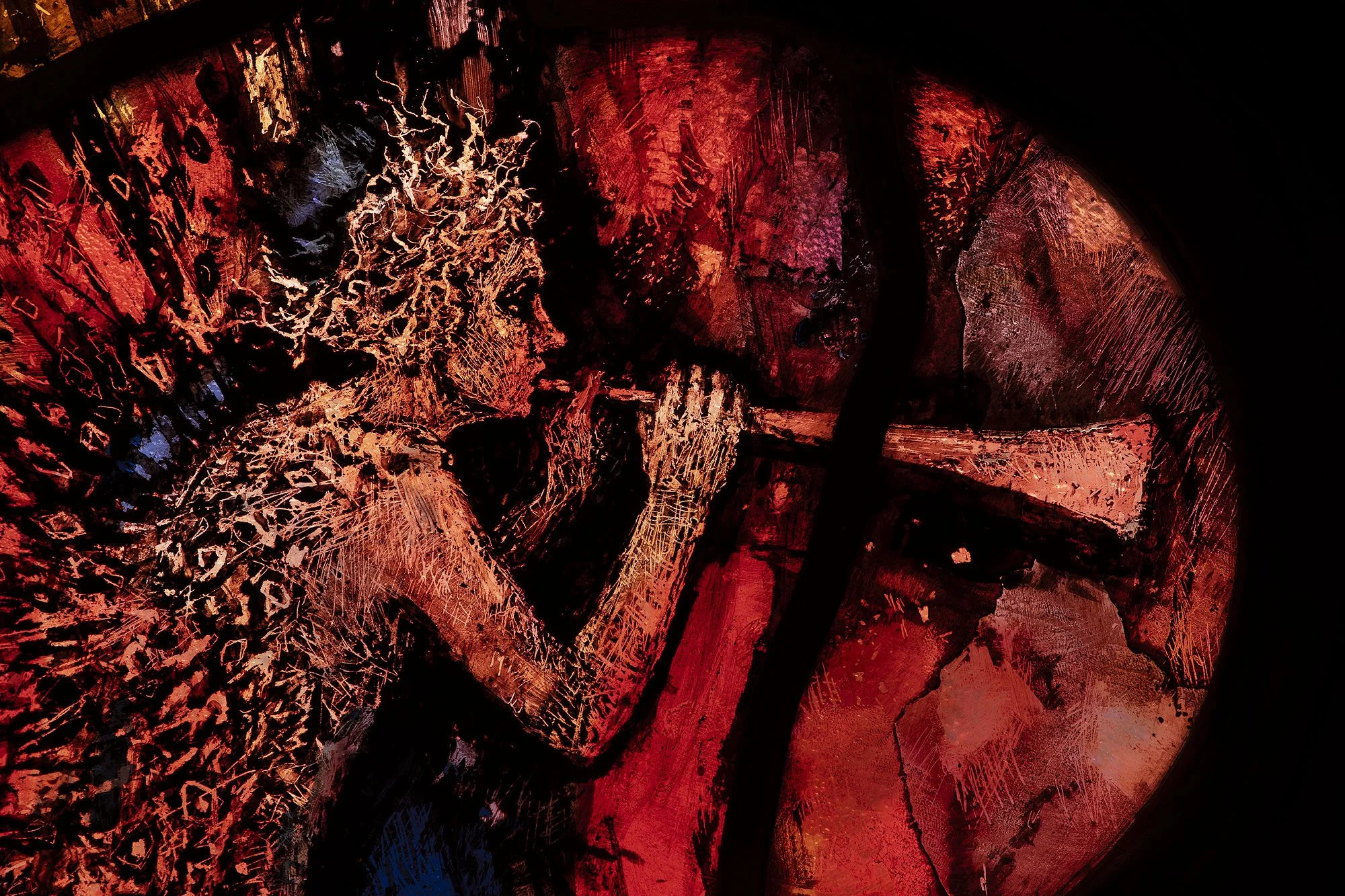
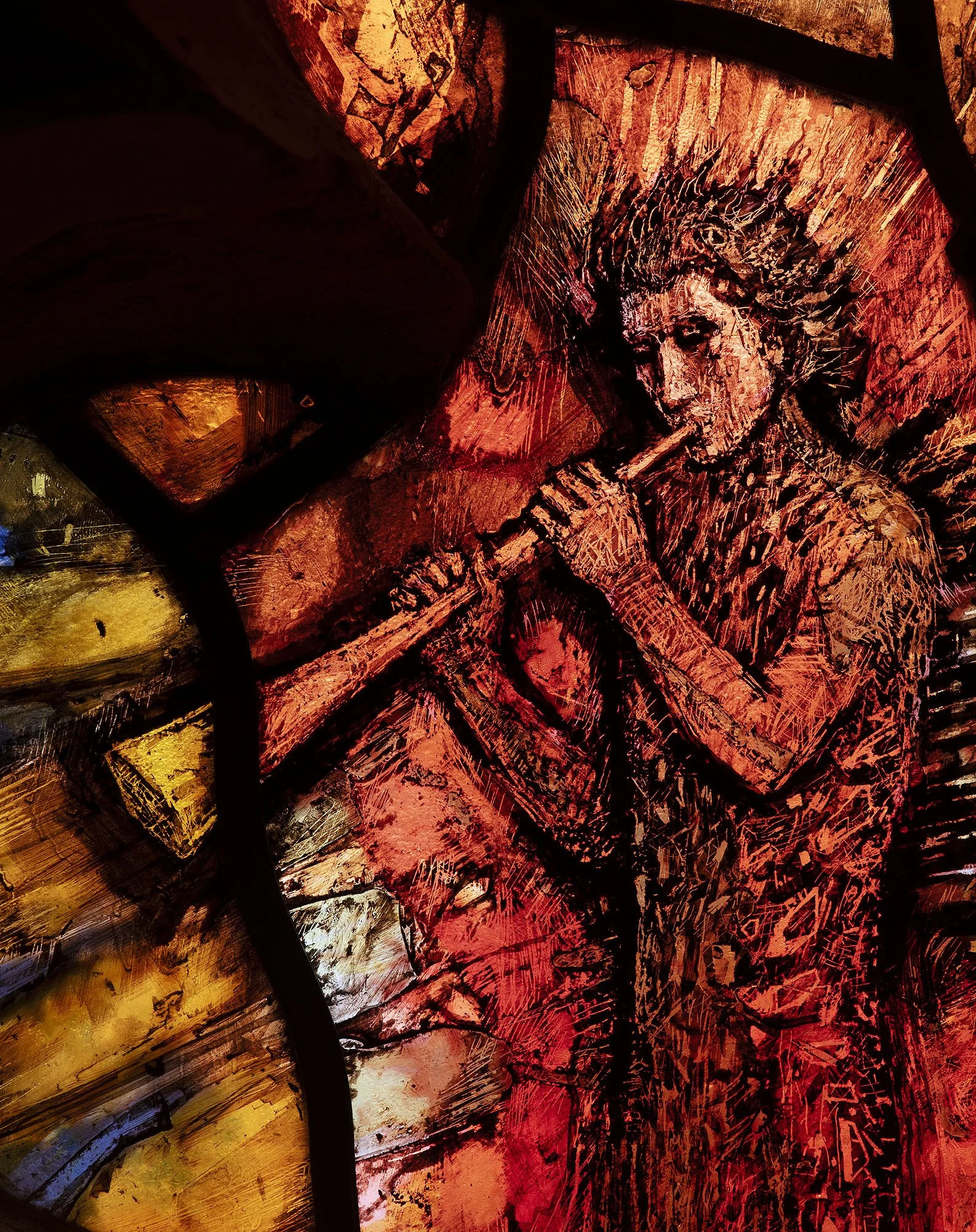
In the tracery the theme moves into resurrection, being changed, of “then knowing even as I am known” [l Corinthians 13:12], of seeing the risen Christ. Sleep; death; mourning; suffering. Then, disjointed figures struggle to realise their new form; others [including, perhaps, a Stukeley, an Aubrey, a Herbert] approach someone with welcoming arms, in a kind of gateway at the summit of the window. “Trumpets” sound to the sides.’
The memorial East window | St Johns Tisbury
Photography by James O. Davies